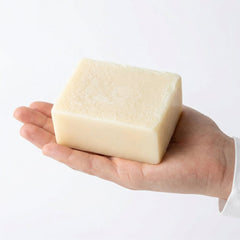

Where tallow wins. Where it doesn't. What to pick if you're switching from a syndet bar or another natural soap.
The short version
If you're using a syndet bar (Dove, Cetaphil, Olay) and your skin feels tight after every wash, tallow is almost always the right swap. If you already use a true natural soap (Aleppo, Castile, African Black) and it works for you, the case for switching is narrower — it comes down to skin-match, ethics, and price per wash. We'll lay that out below without spinning it.
The comparison table
| INSHA Simple Tallow Soap (The OG) | Dove Beauty Bar | Cetaphil Bar | Aleppo Soap | Dr Bronner's Castile | African Black Soap | |
|---|---|---|---|---|---|---|
| Is it actually soap? | ✅ Cold-process, saponified | ❌ Syndet (synthetic detergent) | ❌ Syndet | ✅ Saponified olive + laurel | ✅ Saponified plant oils | ✅ Traditional ash-saponified |
| Lipid profile matches human sebum | ✅ Closest natural match | ❌ Inert detergents | ❌ Inert detergents | ⚠️ Plant lipid, partial | ⚠️ Plant lipid, partial | ⚠️ Plant lipid, partial |
| Ingredients you can read | ✅ 3 ingredients | ❌ 15–20 | ❌ 12–18 | ✅ 2–3 | ✅ ~10 | ✅ 4–6 |
| Synthetic fragrance | ❌ None | ✅ Yes (most variants) | ✅ Yes (most) | ❌ None | ⚠️ Essential oils (varies) | ❌ None |
| SLS / sulphates | ❌ None | ✅ Sodium lauryl isethionate etc. | ✅ Yes | ❌ None | ❌ None | ❌ None |
| Halal-guaranteed | ✅ Every batch | ⚠️ Animal derivatives, not certified | ⚠️ Unclear | ✅ (plant-based) | ✅ (plant-based) | ✅ (plant-based) |
| Mild enough for daily face wash | ✅ For non-acne skin | ⚠️ Marketed as mild, still a detergent | ⚠️ Same | ✅ Usually | ⚠️ Can be drying — high pH | ⚠️ Can be drying for some |
| Lather | Modest, creamy | Aggressive foam | Aggressive foam | Modest | Generous | Modest |
| Cost per wash (rough) | ~30–50 fils | ~30–60 fils | ~50–80 fils | ~30–50 fils | ~40–70 fils | ~40–60 fils |
Tallow vs Dove Beauty Bar
Dove is the bar most people compare tallow to because it's the default. It's also the clearest example of the syndet swap.
Dove is not soap. It's a synthetic detergent bar — sodium lauryl isethionate, stearic acid, sodium tallowate (yes, some tallow), sodium palmitate, lauric acid, sodium isethionate, fragrance, and around ten more. Marketed as “¼ moisturising cream”, which is a way of saying the bar is so drying on its own that it has to be reformulated with cream to be tolerable.
The lather is theatrical. The “squeaky clean” feeling is the barrier being stripped.
Tallow's case: a three-ingredient cold-process bar that cleans without stripping, doesn't need fragrance to mask anything, and doesn't need cream added to it to be tolerable on the skin.
Where Dove wins: availability and price-per-bar at any supermarket. If those are decisive, that's a fair choice.
Tallow vs Cetaphil Bar
Cetaphil is positioned as the dermatologist-recommended gentle bar. It's also a syndet — milder than Dove, but still detergent-based, still fragranced in most variants, still 12–18 ingredients.
If your dermatologist has specifically prescribed Cetaphil for a clinical condition, follow your dermatologist. For general “I want a gentle daily wash”, tallow does the same job with three ingredients instead of fifteen and an animal lipid that matches your skin instead of a synthetic surfactant.
Tallow vs Aleppo soap
This is the closest comparison.
Aleppo is a traditional Syrian soap made from olive oil and laurel berry oil, saponified, cured for months, and aged. It's genuinely good. It's been made the same way for centuries. If you already use Aleppo and your skin loves it, there's no urgent reason to switch.
The differences:
- Lipid match. Aleppo is plant-based (olive + laurel). Tallow is closer to human sebum. For barrier-damaged or very dry skin, tallow tends to feel more nourishing; for oily skin, Aleppo and tallow are roughly tied.
- Laurel oil sensitivity. A small minority react to laurel. If that's you, tallow is an alternative without it.
- Sourcing. Aleppo's supply chain has been disrupted since 2011 and authenticity is harder to verify. INSHA's tallow is documented batch-by-batch from halal-guaranteed grass-fed cattle in a stable supply chain.
If you object to animal-derived products, Aleppo is the natural choice between the two. Tallow isn't trying to replace Aleppo for plant-based households.
Tallow vs Dr Bronner's Castile
Castile (Dr Bronner's is the best-known version) is a saponified plant-oil soap, usually coconut, palm, olive, hemp, and jojoba. Generous lather, very versatile (face, body, dishes, laundry, dog).
Where Castile struggles for some people: it's relatively high pH and can feel drying on the face after a few weeks, especially in hard water. The bar version also dissolves faster than a tallow bar — bar life is shorter per gram.
If you want one product that washes everything in your house including your laundry, Castile wins. If you want the gentlest possible skin wash and you're not trying to wash a car with it, tallow is the better choice.
Tallow vs African Black Soap
African Black Soap (traditionally from West Africa, made with plantain-skin ash, cocoa pod ash, palm oil, and shea butter) is excellent for some skin types — particularly acne-prone, oily, or pigmented skin. It's also rough, crumbly, and can be over-drying for normal-to-dry skin.
Where black soap wins: clarifying use on oily or acne-prone skin.
Where tallow wins: daily full-family use, sensitive skin, dry skin, anyone who finds black soap too stripping.
These aren't really competitors — they solve different problems. Many people use black soap 1–2x a week and a tallow bar the rest of the time.
When tallow soap is the wrong answer
Be honest with yourself:
- If you have active cystic acne and you need a salicylic-acid or benzoyl-peroxide cleanser, a plain tallow bar isn't a treatment.
- If you want a single product to wash dishes, laundry, and your body, Castile is more versatile.
- If you object to animal-derived products on principle, INSHA Simple Tallow Soap is tallow-based. Aleppo or Castile is the right choice for you instead.
- If you genuinely love a thick aggressive foam and the squeaky-clean feel, real soap will disappoint you. The lather is modest by design.
Tallow soap is a daily cleanser built around the simplest possible ingredients and a near-sebum lipid match. It is not a clinical treatment, not a laundry product, not a vegan product. Used for what it's for, it's the simplest thing on your shower shelf.
If you're switching — the cleanest way to do it
- Finish or pause your current body wash. Don't try to use both — you won't know what's working.
- Use the tallow bar alone for two weeks. Body, hands, face (if non-acne), shaving.
- Drop the body lotion for the first three days. See how your skin feels without it.
- If your face feels tight, you're over-washing it — cut face-wash time to 10 seconds.
- Reintroduce only what you miss. Most people end up keeping the bar and dropping the body wash, hand soap, face wash, and shaving cream.
Ready to switch?
The 3-pack of The OG (84 AED) is the standard recommendation for a household switch — one in use, one in the guest bathroom, one curing. The single bar (28 AED) is the lowest-commitment way to test it for two weeks before committing.
FAQ
Is tallow soap better than Dove?
Dove is not soap — it's a synthetic detergent bar with 15–20 ingredients including fragrance and stripping surfactants. Tallow soap is a three-ingredient cold-process bar with a lipid profile that matches human sebum. For most people, tallow cleans more gently and doesn't leave the tight, stripped feeling. Dove's only structural win is availability and supermarket pricing.
Tallow soap vs Aleppo — which one should I pick?
Both are genuinely good. Aleppo is a plant-based saponified soap (olive + laurel) and is the right choice if you avoid animal products. Tallow has a closer lipid match to human sebum and a more stable, documented supply chain. If you already love Aleppo, there's no urgent reason to switch.
Is Dr Bronner's Castile soap as good as tallow soap?
Castile is excellent and very versatile — you can wash a kitchen with it. For skin specifically, it tends to be drier and higher-pH than a tallow bar, and bars dissolve faster. If you want one product for the whole house, Castile wins. If you want the gentlest daily skin wash, tallow wins.
Can I use tallow soap if I have acne?
For non-cystic, mild acne, often yes — many people find their skin calms once they stop stripping with detergents. For active cystic acne, a plain tallow bar isn't a treatment. Use the actives your dermatologist recommends and consider tallow as the gentle non-stripping daily cleanser alongside them.
Is tallow soap vegan?
No. It's made with rendered animal fat. If that's a non-starter for you, Aleppo or Castile are the natural plant-based alternatives. INSHA is built around halal-traceable animal sourcing — a different value choice, not a hidden one.
Why is INSHA Simple Tallow Soap not much cheaper than Dove?
Because cold-process soap made from halal grass-fed tallow and cured for 4–6 weeks costs more to produce per bar than a mass-manufactured syndet pressed and shipped in days. The price reflects the input and the time, not a margin choice. Per wash, the gap is small once you account for bar life.
Keep reading: Why your body wash dries out your skin · How to use a tallow soap bar · Simple Tallow Soap product page